
Every Wall Is a Door: The Energy Truth a War Has Taught Us
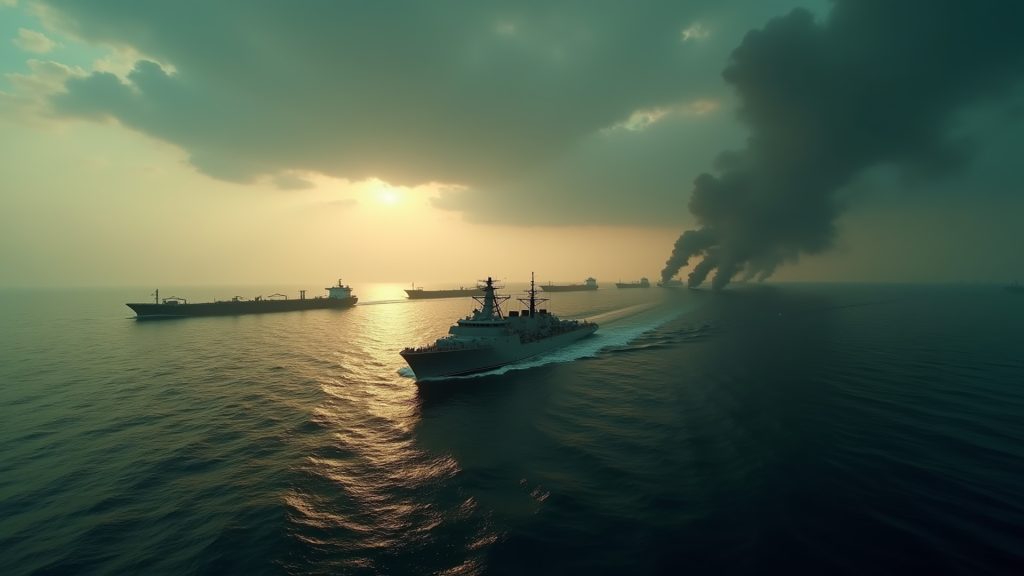
Are you also worried about whether oil prices will break $200? How much more will it cost to fill up your tank? Today, I will use three data points and two scenarios to explain this matter thoroughly.
What determines oil prices is never the war itself, but “how big the gap is” and “how long the blockage lasts.” The Strait of Hormuz has been blocked for nearly a month now, and global oil prices have surged from $75 to over $100, fluctuating at high levels. But we cannot just look at news headlines; we must examine the underlying mathematics.
In the following, we will proceed from three levels. First, we will use authoritative data to answer “how big the gap actually is”—this is not guesswork, but quantifiable. Second, we will extrapolate three possible scenarios—continuation of the status quo, a full blockade, and a protracted war—corresponding to different oil price ranges and durations of impact. Finally, we will ask a deeper question: will this crisis become an accelerator for energy structure transformation?
An ancient saying goes, “In times of safety, do not forget danger; in times of survival, do not forget perishing.” This is not about spreading anxiety, but about saying: in turbulent times, those who see clearly can hold their ground. Our goal is not to make you anxious about oil prices, but to help you understand: in such a world, how can you judge and how can you choose.
Section 1: How Big Is the Gap?—The Truth Behind the Data on the Strait of Hormuz
Let me start with a memory. Back in 1997, when I was still a credit officer at a branch, I handled a loan for a trading company. The owner, surnamed Chen, was a shrewd and capable man whose company’s turnover doubled every year. Then the Asian financial crisis struck, and overnight the Southeast Asian currencies depreciated. Mr. Chen’s goods were shipped, but the buyers could no longer pay. His accounts receivable turned into bad debt in an instant. His inventory also lost value. Within a few months, the assets side of his personal balance sheet shrank by two‑thirds.
Mr. Chen came to see me, sat across from my desk, his eyes empty. He said, “Branch manager, it’s not that I don’t want to repay the loan; I really have no money. The only thing I can do now is clear out my inventory, collect whatever receivables I can, and then pay back slowly.” He did not abscond or transfer assets; he chose to shrink—selling his car, selling the apartment he had prepared for his son, and repaying bit by bit. It took him five years to clear the debt.
I tell this story to make a point: before the storm arrives, you must first see how big the storm is. If you cannot even calculate “how big the gap is,” you will not know what to do next. Today, the global energy market’s storm is right in the Strait of Hormuz.
What is the Strait of Hormuz? It is the only maritime passage connecting the Persian Gulf to the Gulf of Oman. The crude oil exports of Saudi Arabia, Iraq, Qatar, the United Arab Emirates, Kuwait, and other Middle Eastern producers all pass through it. You can think of it as the “aorta” of the global energy system—the thickest blood vessel in the human body. Once it is blocked, the entire body’s blood supply is compromised.
Why is it so important? Because roughly one‑fifth of the world’s oil passes through this strait every day. The International Energy Agency’s latest monthly oil market report, released on March 12, 2026, gives a precise number: before the war, the Strait of Hormuz transported an average of 20 million barrels per day of crude oil and petroleum products. Twenty million barrels per day—what does that mean? Global consumption is about 100 million barrels per day. If the strait is blocked, one‑fifth of global supply is immediately cut off.
You may not realize how narrow this strait is. Its narrowest point is only 33 kilometers—roughly the length of half of Beijing’s Third Ring Road. Large tankers must pass through a deep‑water channel less than three kilometers wide, lying between Omani and UAE waters. In such a narrow waterway, a single vessel breakdown or any attack can paralyze the entire route.
So, what has become of this “aorta” after the outbreak of war?
First, look at the data. On March 14, the number of vessels transiting the Strait of Hormuz dropped to zero for the first time since the conflict began, according to tracking data from the maritime analytics company Windward, reported by The Daily Telegraph on March 16, 2026. Before the war, an average of 77 ships passed through the strait each day. From 77 to zero—that is the picture of a blocked “aorta.”
You might think a single day with no ships could be a coincidence. But a report from J.P. Morgan’s commodities research team in early March paints a fuller picture: currently, the number of vessels passing through the strait is about 6 percent of the historical average. Normally, 138 ships a day; now there are only about eight, most of them Iranian.
Six percent—what does that mean? It means that the Strait of Hormuz, the aorta of global energy, has been almost completely obstructed.
How much of the original 20 million barrels per day has actually been lost? The IEA’s report estimates that Gulf countries have been forced to cut crude oil production by at least 10 million barrels per day, because alternative transport capacity around the key shipping lane is limited and storage facilities are nearing capacity. This cut is not voluntary; it is forced. Oil is extracted but cannot be shipped out; storage tanks fill up, so production must stop. The IEA expects global crude supply to fall by about 8 million barrels per day in March.
Behind these numbers lies a deeper question: where has all the “surplus” oil gone?
A more refined calculation comes from the March 20, 2026, oil and gas industry monthly report by Huatai Securities. The report notes that taking into account the disruption of transport through the Strait of Hormuz, the full‑capacity operation of alternative pipelines in Saudi Arabia and the UAE, potential production increases in North America, and preventive refinery run cuts in net oil‑importing countries, the net global supply shortfall is about 2 million barrels per day. This is the “net gap” after accounting for all substitute measures.
Huatai’s calculation method is worth noting. It considered three alternative routes: first, Saudi Arabia’s east‑west pipeline to the Red Sea port of Yanbu, with a capacity of about 5 million barrels per day; second, the UAE’s Habshan‑Fujairah pipeline to the Gulf of Oman, with a capacity of about 1.5 million barrels per day; third, the potential for increased production in North America. Adding these three alternatives and subtracting the losses from the transport disruption yields a net gap of roughly 2 million barrels per day.
But this calculation carries an implicit assumption: the pipelines are running at full capacity. A March 6 report from Goldman Sachs’ commodities research team examined this issue and found an interesting phenomenon: although the theoretical capacity exists, the actual volume redirected through these pipelines has been much lower than the theoretical maximum. Goldman’s tracking data show that over the past four days, the net redirected flow through the pipelines and the two ports increased by only about 900,000 barrels per day.
Why the discrepancy? Because a pipeline’s capacity is one thing; the loading capacity at the terminal ports, the scheduling ability of shipping companies, and the willingness of insurers to underwrite are quite another. Most shipowners are currently in “wait‑and‑see” mode, fundamentally because the physical risk inside the strait remains extremely high. What are shipowners waiting for? A signal—whether to continue detouring around the Cape of Good Hope or to risk passing through the strait.
What is the cost of detouring around the Cape of Good Hope? The voyage is 40 percent longer, transit time extends by 10 to 15 days, Very Large Crude Carrier (VLCC) freight rates have surged from $20,000 per day before the war to over $53,000 per day, and insurance premiums have skyrocketed by 300 percent. All these costs ultimately pass through to oil prices.
Now, let us do a bit of arithmetic.
Brad Setser, a senior fellow at the Council on Foreign Relations, offered a calculation framework in an online seminar on March 17: if global daily oil supply were reduced by 10 million barrels, international oil prices could rise to around $170 per barrel. In that scenario, U.S. economic growth would slow by at least one percentage point.
He was speaking about a “10 million barrel reduction” scenario. What is our actual current supply gap? The IEA says Gulf countries have cut at least 10 million barrels per day in output; Huatai Securities calculates a net gap of 2 million barrels per day. Why the discrepancy? Because “output cuts” and “net gap” are two different concepts—output may be cut by 10 million barrels per day, but part of that can be offset by inventory releases, alternative pipelines, and production increases elsewhere, so the net gap transmitted to the market is around 2 million barrels per day.
But even 2 million barrels per day should not be underestimated. The global oil market is a highly sensitive system; for every increase of 1 million barrels per day in the supply‑demand gap, oil prices tend to move by double‑digit percentages. A gap of 2 million barrels per day is enough to cause oil prices to fluctuate violently between $90 and $120.
The J.P. Morgan report offers an even more specific judgment: if the Strait of Hormuz were completely closed, Middle Eastern oil‑producing countries would be forced to halt production after 25 consecutive days of operation. Twenty‑five days—three and a half weeks. In other words, if the strait were blocked for a full month, Saudi Arabia, the UAE, and Kuwait would have no choice but to watch their oil fields shut down, because the oil could not be shipped out and storage space would be exhausted.
Faced with this huge supply gap, the U.S. government took two actions.
First, it released strategic petroleum reserves. On March 13, 2026, the U.S. Department of Energy announced the activation of an emergency exchange program for the Strategic Petroleum Reserve, initially releasing 86 million barrels of crude as part of a coordinated 400 million barrel release by International Energy Agency member countries. Kelly Hustvedt, Assistant Secretary for Carbon Management and Geothermal Resources at the DOE, stated that this was “a step to help ensure supply remains reliable in a period of high global uncertainty.”
Zhang Monan, a researcher at the China Center for International Economic Exchanges, made a blunt observation in an interview with China National Radio: these reserves can cover at most one tenth of the global energy gap. One tenth. What about the remaining 90 percent?
Second, it eased sanctions.
On Russia: On March 12, the U.S. Treasury Department issued a 30‑day license allowing countries to purchase Russian crude and petroleum products already in transit. Treasury Secretary Scott Bessent described it as a “targeted, short‑term measure” applying only to oil already at sea. Roughly 124 million barrels of Russian crude were floating on tankers worldwide—equivalent to about five to six days of U.S. demand.
On Venezuela: On March 18, the U.S. Treasury Department’s Office of Foreign Assets Control issued a general license authorizing, under certain conditions, U.S. entities to engage in transactions with the state‑owned Venezuelan oil company and its subsidiaries. The license covers a wide range of activities, including the movement, export, re‑export, sale, resale, supply, storage, procurement, delivery, and transport of Venezuelan oil and petroleum products, as well as new investment in Venezuela’s oil and gas sector.
U.S. officials stated that the license aims to stimulate investment in Venezuela’s energy industry, increasing global oil supply for the benefit of both Venezuela and the United States. The U.S. Secretary of the Interior even went so far as to project that Venezuelan oil production could reach 4 million barrels per day.
But how reliable are these measures? Venezuela currently produces about 1 million barrels per day; even if production increases, the potential is limited. The Russian oil waiver applies only to volumes already at sea—it adds no new supply. Taken together, neither comes close to filling the 2 million barrel per day net gap. Zhang Monan described it in four words: “a drop in the bucket.” That is mathematics—it does not care about hopes.
Notably, the U.S. decision drew sharp criticism from European leaders. German Chancellor Friedrich Merz called it “wrong to relax sanctions on Russian oil for any reason,” while European Council President Antonio Costa said the “unilateral decision” was deeply concerning.
An even more thorny issue is that this war has impacted the refined products market more directly than the crude oil market.
The IEA report notes that over 3 million barrels per day of refining capacity in the Middle East have already ceased operations. This means not only crude oil but also gasoline, diesel, and jet fuel cannot be shipped out. Asian refineries have cut throughput by 3.3 million barrels per day, further tightening the supply‑demand balance.
What does this mean? It means not only crude oil but also the gasoline, diesel, and jet fuel that have already been refined cannot be shipped out. Meanwhile, Asian refineries, which rely heavily on Middle Eastern crude, are facing raw material uncertainty and have begun precautionary output cuts. Kpler estimates that Asian refinery throughput will fall by 3.3 million barrels per day in March. This reduction in refined product supply will further exacerbate the imbalance in the global energy market.
At this point, you might be thinking: what about China? With its high dependence on Middle Eastern crude, will China be affected?
Huatai’s report offers some relatively reassuring data. According to Kpler’s statistics, as of March 2026, China’s visible onshore crude oil inventories exceed 1.2 billion barrels. Assuming a 80 percent drop in China’s crude imports from the Middle East in 2026, the inventory could fill the gap for 260 days. Two hundred and sixty days—almost nine months. That is China’s “strategic buffer.”
In more severe scenarios, China also has multiple layers of safeguards: reducing refined product exports, accelerating the substitution of new energy vehicles, curbing excess petrochemical production, supplementing with coal‑based chemicals, and increasing crude purchases from Canada, Africa, and South America. China’s oil and gas industry chain is relatively complete, and its resilience is much stronger than many other countries.
By contrast, South Korea, India, and Southeast Asia are in a more fragile position. Huatai’s calculations show that, given current onshore inventory levels, the number of days these countries and regions could cover a shortfall in Hormuz supply are: South Korea 56 days, India 50 days, Southeast Asia 48 days. Less than two months. That is why these countries are so nervous about the situation in the Strait of Hormuz—their “strategic buffer” is too short.
Now, let us return to the original question: how big is the gap?
Let us put all the data together for a comprehensive quantitative analysis.
Baseline: pre‑war daily throughput of the Strait of Hormuz: about 20 million barrels per day, accounting for 20 percent of global petroleum trade.
Current status: on March 14, vessel traffic dropped to zero for the first time; current traffic is about 6 percent of the historical average.
Output cuts: Gulf countries have reduced crude production by at least 10 million barrels per day.
Net gap: after accounting for alternative pipelines, North American production increases, and other offsets, the global short‑term supply gap is about 2 million barrels per day.
Refined product impact: about 3 million barrels per day of Middle East refining capacity shut down, and Asian refineries have cut throughput by 3.3 million barrels per day.
How much can strategic reserves cover? IEA member countries are releasing 400 million barrels collectively, of which the U.S. is releasing 172 million barrels. Based on global consumption of 100 million barrels per day, 400 million barrels represent about four days of global consumption. Against a net gap of 2 million barrels per day, 400 million barrels could theoretically fill the gap for 200 days—but that is an ideal scenario, because the pace of reserve releases is limited, and global inventory distribution is uneven.
In the concluding section of its monthly report, Huatai Securities offers a medium‑term judgment: considering the transport disruption through the Strait of Hormuz, the limited alternative routes, the looming production stoppages due to saturated storage tanks, and the likely replenishment of crude and product stocks after the strait reopens, they have raised their forecast for the average 2026 Brent crude price to $90 per barrel, compared with their earlier forecast of $78.
The implication is that even if the war ends, oil prices will not return to pre‑war levels. The world will enter a round of “stockpile replenishment”—countries, having learned the lesson of the Strait of Hormuz blockage, will increase their strategic petroleum reserves. This replenishment demand will support oil prices for months or even a year ahead.
We can now answer the question “how big is the gap” in one sentence: the pre‑war daily throughput of 20 million barrels has dropped to 6 percent of normal levels, the actual net gap is about 2 million barrels per day, and the shutdown of refining capacity makes the shortage of refined products even more severe.
This gap can be covered only one‑tenth by strategic reserves; relaxing sanctions on Venezuela is also a drop in the bucket. Huatai estimates that if the gap persists, the average 2026 Brent price will remain above $90, rather than the $78 forecast before the war.
But even more critical than the gap is “how long the blockage lasts.” If it is only a few days, oil prices will spike and then recover; if it lasts weeks, inventories will be depleted, and that will be a different story; if it lasts months or longer, it will not just be an oil price issue, but a global economic issue.
That is why Mr. Chen’s story remains relevant today. During the 1997 Asian financial crisis, he was confronted not with “how big the gap was” but with “how long the storm would last.” He did not know the answer, but he did know one thing: holding on to his core assets was the only way to survive until the storm passed. The same principle applies to our discussion of oil prices today—how big the gap determines the intensity of the storm; how long the blockage lasts determines whether you can ride it out.
Section 2: How Long Will the Blockade Last?—A Scenario Analysis
When you encounter a traffic jam on the highway, what concerns you most is not “what happened ahead” but “how long it will last.” By the same token, with the Strait of Hormuz blocked, the key variable is not “how big the gap is”—we have already quantified that—but “how long the blockage will last.”
If it is just a few days, oil prices will spike and then come back down; if it lasts weeks, inventories will be depleted, and we will face a very different scenario; if it lasts months or longer, it will not be just about oil prices but about the global economy.
A report in The Beijing News on March 18, citing interviews with several experts, reached a core judgment: the more likely situation in the Strait of Hormuz is “phased tension and intermittent shipping disruption”; whether it becomes protracted depends on the duration of the military conflict between the U.S., Israel, and Iran and the possibility of de‑escalation.
Why this judgment? Because Iran’s strategy is undergoing a fundamental shift.
Military commentator Song Zhongping gave a very insightful analysis in an interview with The Beijing News. He noted that previously, Iran had been cautious about closing the strait, one important reason being that the strait is also vital for its own crude oil exports. Closing it would cut off a major source of government revenue, a “kill‑the‑enemy‑and‑lose‑a‑thousand‑of‑your‑own” move. But now, in the face of U.S. and Israeli military strikes, Iran has fewer reasons to hold back.
What is Iran’s strategy now? Song Zhongping put it bluntly: to drag the United States and Israel into a protracted war. High‑intensity warfare is costly for the U.S. The U.S. and Israel together spend $1.8 billion to $2 billion per day on military operations. How long they can sustain that is a huge unknown.
He further noted the stark difference in strategies: the U.S. and Israel want a quick, decisive victory to end the war as soon as possible, whereas Iran, aware of its own power gap, aims to turn the conflict into a war of attrition, using its resilience to exhaust the high‑intensity attacks of the U.S. and Israel, while inflicting heavy losses on them and their allies, thereby forcing them to cease fire.
“Iran wants to drag things out; perhaps the U.S. and Israel will not be able to hold on. But the question is, if it drags on, can Iran itself hold on?” Song said. “Right now it is a contest of endurance—like two tortoises in a staring contest: whoever blinks first loses.”
This metaphor is very vivid. But we need to ask: how long will this “staring contest” last?
An in‑depth analysis published by Shipping Online on March 19 proposed a “baseline scenario.” Based on industry assessments, the analysis suggested that the war would last about two weeks, involving the U.S., Iran, and the entire Middle East region. Air traffic would shrink, and the Strait of Hormuz would be largely blockaded. After two weeks, political turmoil in Iran might continue, but macro uncertainty would diminish, and the strait would gradually reopen. Within four to six weeks, the situation would hopefully return to something resembling the pre‑war state, though uncertainties would persist.
But the analysis candidly admitted that given the rarity of rapid and smooth regime changes in history, the probability of this baseline scenario is declining.
Why is the probability declining? Because the statements of Iran’s new Supreme Leader, Mojtaba Khamenei, have been tougher than the outside world expected.
According to Xinhua News Agency, Mojtaba Khamenei issued his first statement since taking office on March 13, setting out systematic views on the country’s development direction, regional situation, and responses to external challenges. He made it clear that Iran would not give up revenge and would continue to block the Strait of Hormuz.
On the same day, The New York Times quoted a U.S. official familiar with intelligence reports as saying that although the U.S. military claimed to have destroyed larger Iranian naval vessels, Iran had been deploying small boats since March 12 to lay mines in the relevant waters. Commentator Wang Qiang, in an analysis on March 13, noted that based on multiple sources, it is highly probable that Iran has indeed laid mines.
Wang Qiang’s analysis revealed a key tactical logic: mining is a typical asymmetric warfare tactic with low cost and high deterrence. The mere appearance of a single mine near the shipping lane is enough to cause massive shipping disruption; insurers and shipowners will never allow vessels to sail through such waters. In other words, a mine costing only a few thousand dollars can bring shipping to a halt for days or even more than ten days—extremely cost‑effective.
But mining is also a double‑edged sword for Iran. After all, Iran’s own imports and exports are highly dependent on the Strait of Hormuz, and the U.S. military has sea and air supremacy, enabling rapid mine‑sweeping operations using minesweepers and helicopters. Therefore, Iran’s true intention is to use the lowest possible cost to create the largest possible economic shock, forcing Western countries to pressure the U.S. and Israel into a ceasefire.
This judgment aligns closely with Song Zhongping’s analysis: Iran does not intend to keep the strait closed forever; it wants to use the strait as a strategic bargaining chip to force the U.S. and Israel back to the negotiating table.
Now, let us bring all these analyses together and extrapolate three possible scenarios.
Scenario 1: Continuation of the Status Quo.
What does “continuation of the status quo” mean? It means Iran maintains a “de facto blockade” but does not impose a total closure. Iran’s Revolutionary Guard Corps spokesman warned on March 10 that if U.S. and Israeli attacks continued, they would not allow “a single liter of oil” to be shipped out of the Middle East. In practice, however, Iran has not completely shut the strait; instead, it is using the fear it generates to make shipowners and insurers voluntarily avoid the area.
Liu Ying, a researcher at the Chongyang Institute for Financial Studies at Renmin University of China, explained this strategy clearly in an interview with The Beijing News: the Strait of Hormuz has effectively become Iran’s strategic bargaining chip in its conflict with the U.S. and Israel. Even if Iran does not completely block the strait, merely creating security concerns that reduce the number of vessels transiting can serve as a strategic deterrent.
What is the state of shipowners now? They are watching. As long as a single ship is attacked in the strait, insurance premiums will rise to a level that makes shipowners hesitate. That is a “de facto blockade”—the road is not physically closed, but no one dares to travel it.
What happens to oil prices in this scenario? The answer is: they will fluctuate at high levels but will not go out of control.
Fitch Ratings provided a quantitative estimate in a report released on March 20. The report assumed a “three‑month closure” scenario: if the Strait of Hormuz were closed for three months, the average Brent crude price for the year would be $100 per barrel, with a peak average of $130.
A key premise of this estimate is that in the three‑month closure scenario, global demand would decrease by about 2.5 percent. Why would demand decrease? Because higher oil prices would naturally lead consumers to use less oil, and businesses to reduce production—this is what economists call “demand destruction.”
In The Beijing News report, Song Zhongping offered another judgment: if the newly installed Supreme Leader Mojtaba Khamenei chooses to remain tough, the battle for the Strait of Hormuz will be thorny. But he also noted that the U.S. and Israel want a quick, decisive victory to end the war as soon as possible.
Synthesizing these judgments, the core characteristics of the “status quo continuation” scenario are: shipping through the strait remains at extremely low levels, but occasional vessels are allowed through; oil prices oscillate in the $90–$120 range; the duration is measured in weeks or months, depending on how negotiations progress.
At present, this scenario has the highest probability.
Scenario 2: Full Blockade.
What does “full blockade” mean? It means Iran takes the extreme step of laying mines in the Strait of Hormuz, completely cutting off all vessel traffic.
This is not science fiction. Song Zhongping pointed out explicitly in his interview with The Beijing News that Iran has a variety of close‑shore harassment and attack capabilities, including mines, drones, and missiles. During the Iran‑Iraq War in the 1980s, Iran laid about 150 mines in the Strait of Hormuz; one of them struck the USS Samuel B. Roberts, a U.S. frigate, causing severe damage.
Wang Qiang’s analysis added a critical detail: Iran has been laying mines in the relevant waters using small boats since March 12. Although Iran immediately denied this, multiple sources suggest it is highly probable.
If a full blockade occurs, what chain reactions would follow?
First, inventories would be exhausted. J.P. Morgan’s analysis indicates that if the Strait of Hormuz were completely closed, Middle Eastern oil producers would be forced to halt production after 25 consecutive days. Twenty‑five days—three and a half weeks. That means if the strait were blocked for a full month, Saudi Arabia, the UAE, and Kuwait would have to watch their oil fields shut down, unable to ship the oil out, storage space exhausted.
Second, oil prices would surge. Saad Al‑Kaabi, Qatar’s Minister of State for Energy Affairs, predicted in an interview on March 6 that if tankers cannot pass through the Strait of Hormuz, crude oil prices could reach $150 per barrel in the coming weeks.
Goldman Sachs’ commodities research team, in a report released on March 19, offered an even more unsettling assessment: if traffic through the Strait of Hormuz remains extremely low for an extended period, causing the market to focus on the risk of a prolonged disruption, Brent futures could surpass the historical high of 2008.
What was the 2008 historical high? $147. Goldman’s analytical logic is that given recent attacks on energy infrastructure, the Iran war poses a risk to long‑term oil prices. They analyzed the five largest supply shocks in history and found that on average, production was still 42 percent lower four years later, reflecting damage to infrastructure and reduced investment.
Fitch’s report provided more precise quantitative forecasts: if the Strait of Hormuz were closed for six months, the average Brent crude price for the year would be $120, with a peak of $170. During the six‑month closure, oil prices would spike to the $130–$170 range, before falling back to $90 by year‑end.
Fitch’s forecast rests on a key assumption: in the six‑month closure scenario, global demand would decrease by about 5.5 percent. In other words, oil prices would have to rise high enough to “squeeze out” 5.5 percent of demand to rebalance the market.
Scenario 3: Protracted War.
This scenario is the most worth extrapolating because its impact would not be measured in weeks but in months or even years.
Mojtaba Khamenei’s statement on March 13 contained a key phrase: “continue to block.” This indicates that Iran’s strategy is to drag the U.S. and Israel into a protracted war.
Song Zhongping’s analysis went to the core: high‑intensity war is costly for the U.S. The U.S. and Israel together spend $1.8 billion to $2 billion per day on military operations. Iran knows it is outmatched and wants to turn the conflict into a war of attrition, using its resilience to wear down the high‑intensity attacks of the U.S. and Israel, while inflicting heavy losses on them and their allies, forcing them to cease fire.
Qin Tian, Deputy Director of the Middle East Studies Institute at the China Institutes of Contemporary International Relations, offered a different perspective on the possibility of a protracted war in an interview with China Central Television on March 18. He noted that the U.S. and Israel have no fundamental disagreement on weakening or toppling the Iranian regime, but as the war evolves, their “endgame goals” are indeed diverging.
Why the divergence? Qin analyzed that within the U.S., there are multiple opinions; political polarization has been intense in recent years. Within the Republican Party, there are also different voices. Among the supporters of the “Make America Great Again” movement, a considerable number believe the U.S. should not have launched this war and should not become entangled in a new Middle Eastern war.
At the same time, the U.S. remains a global power with global interests. It cannot completely ignore the obstruction of navigation in the Strait of Hormuz or the rise in global oil prices. It cannot ignore attacks on its allies in the region.
By contrast, Israel is in a much easier position. Its domestic consensus on striking Iran is high; it is much less sensitive to oil prices than the U.S.; and it has no responsibility to stabilize the Middle East or defend the Gulf states.
Qin’s conclusion is that if the war drags on for a very long time, the pressure on the U.S. at home and abroad will grow, and its differences with Israel will become more pronounced. Ultimately, the U.S. will make a decision to exit the war based on its own perceptions and interests.
What does this judgment imply? It implies that the likelihood of a protracted war depends on how long the U.S. can hold out. And how long the U.S. can hold out depends on the impact of oil prices on the U.S. economy and on the mid‑term elections.
Liu Ying, in her interview with The Beijing News, provided a specific number: the average U.S. gasoline price is generally $2–$3 per gallon; if the price exceeds $4 per gallon and stays there for more than three months, the probability of the ruling party losing the mid‑term elections exceeds 70 percent.
This is the real dilemma facing the U.S. If the war drags on, oil prices break through $150 and remain there for months, the inflationary pressure on the U.S. economy would become unbearable, and the Trump administration would face enormous political pressure. At that point, the U.S. might be forced to seek a way out of the war.
What would happen to oil prices in a protracted war?
Zhang Monan’s judgment, in an interview with China National Radio, was that Brent crude futures could break through $150 or even higher, sending the world back to the oil crisis era of the 1970s.
What was the 1970s oil crisis? In the 1973 Yom Kippur War, Arab oil‑producing countries imposed an embargo on nations supporting Israel, causing oil prices to rise from $3 to $12. In the 1979 Iranian Revolution, oil prices rose from $15 to $34. Both crises triggered global economic recessions—stagflation.
If the war is protracted, it would not just be an oil price issue. Zhang Monan’s analysis pointed out that, on one hand, international oil prices would hit new highs, dramatically raising global logistics, production, and manufacturing costs; on the other hand, global demand would contract sharply, and the global economy could fall into a state of stagnation. That is stagflation—inflation and recession occurring simultaneously.
Yan Yan, a researcher at the China National Institute for South China Sea Studies, added another dimension in an analysis on March 6. He noted that the Strait of Hormuz acts as the “source gate” for global energy supply. Currently, several tankers have been damaged by attacks, and large numbers of tankers are stranded. As a result, global natural gas and oil prices have soared, triggering global energy panic and fears of economic recession.
Yan also raised a deeper observation: the blockade crisis in the Strait of Hormuz sounds an alarm for the Malacca Strait, another “dual‑choke point” for global energy trade. Once an energy choke point becomes a geopolitical weapon, the entire region and even the global economy will pay a heavy price.
Now, let us compare the three scenarios.
Scenario 1, status quo continuation. Characteristics: Iran maintains a “de facto blockade,” occasionally allowing vessels through; shipowners voluntarily avoid. Duration: weeks to months, depending on negotiations. Oil price range: $90–$120. Probability: highest.
Scenario 2, full blockade. Characteristics: Iran lays mines, completely cutting off all vessel traffic. Duration: weeks to months, depending on U.S.‑Israeli mine‑sweeping capacity and Iran’s determination to maintain the blockade. Oil price range: peak $130–$170, annual average $100–$120. Probability: moderate.
Scenario 3, protracted war. Characteristics: The U.S., Israel, and Iran become mired in a long war; the strait remains obstructed for months or even years. Duration: more than six months, depending on the U.S.’s political endurance. Oil price range: above $150 for months, potentially spiking to $200. Probability: to be watched, but not yet the baseline scenario.
As the ancient military strategist Sun Tzu said, “Know your enemy and know yourself, and you will never be defeated in a hundred battles.” The purpose of forecasting is not to bet on which scenario will come true, but to give you a clear picture—what is the worst case, what is the best case, and how to navigate between them.
The three scenarios correspond to three different answers to “how long.” Status quo continuation: blockage for weeks to months. Full blockade: blockage for weeks to months, but with higher intensity. Protracted war: blockage for six months or more. The probabilities differ, but they share one commonality: in any scenario, the Strait of Hormuz is unlikely to return to its pre‑war level of shipping in a day or two.
Song Zhongping’s metaphor of “two tortoises in a staring contest” captures the essence of this game: it is not about whose fists are harder, but about whose resilience is stronger. And how long this staring contest will last depends on three variables: the U.S.’s tolerance for high oil prices, Iran’s ability to bear its own economic costs, and Israel’s attitude toward war objectives.
We will now ask a deeper question: during the time the Strait of Hormuz is blocked, have human beings found an alternative path? Can new energy take up the mantle?
Section 3: The Alternative Path—Can New Energy Take Up the Mantle?
At this point, you might be thinking of another question: since the Strait of Hormuz is blocked and oil prices are so high, why don’t we simply replace oil with new energy? Aren’t wind, solar, and nuclear energy developing all the time?
This question goes to the heart of the matter. But to answer it, we must first clarify a key point: new energy mainly substitutes for “electricity generation,” while oil is primarily used for “transportation fuel” and “chemical feedstocks.” The two are not perfectly substitutable. You cannot directly pour photovoltaic electricity into a fuel tank.
But this distinction is being eroded by two trends.
The first is electric vehicles. They directly link electricity consumption with transportation demand. The electricity used in your EV can come from wind, solar, or nuclear power. This means that in the transportation sector, which accounts for a large share of oil consumption, substitution is happening in real time.
Lin Boqiang, Director of the China Institute for Studies in Energy Policy at Xiamen University, provided some data in an interview on March 13: the transportation sector consumes about 57–62 percent of China’s oil. Currently, the penetration rate of new energy vehicles in China exceeds 50 percent; in southern regions, six or seven out of every ten cars sold are EVs.
What does this mean? It means that the amount of oil displaced by EVs in China is growing at an astonishing rate. In 2025, the global daily displacement of oil by EVs was about 1.7 million barrels, equivalent to 70 percent of Iran’s export volume. This number would have been unimaginable during the 1973 oil crisis.
The second trend is the restructuring of electricity consumption. The International Energy Agency’s “Electricity Mid‑Year Update,” released in August 2025, made a landmark judgment: globally, renewable energy, including hydropower, will surpass coal in electricity generation as early as 2025 or 2026. Solar and wind are the main drivers; their combined share of generation will rise from 15 percent in 2024 to 17 percent in 2025, exceeding 19 percent in 2026.
The latest data from ABI Research provide more specific benchmarks: as of 2026, global renewable energy installed capacity is 3,610 GW, of which hydropower accounts for 1,289 GW, wind power 1,081 GW, solar 754 GW, and nuclear 395 GW. The Asia‑Pacific region accounts for 46 percent of the global total, or 1,664 GW.
Consider China. China leads the world in wind power, with 570 GW of installed capacity, more than half the global total. In solar, China has 3,868 utility‑scale solar plants with a total capacity of 228 GW, also ranking first in the world.
These numbers send a clear signal: new energy is no longer “marginal.” The IEA predicts that renewable electricity generation will grow at an average annual rate of about 8 percent from 2025 to 2026. This growth rate is enough to reshape the global power structure within a few years.
But is that enough? Not yet. Because we face a deeper challenge: energy “storage” and “stability.”
Lin Boqiang made a key point in his interview: to sustain the large‑scale, stable growth of wind and solar power, energy storage is an absolutely essential hurdle to overcome during the “15th Five‑Year Plan” period (2026–2030). Once storage costs fall through scaling up, it will not only solve the intermittency problem of renewable integration but also reshape China’s underlying energy architecture.
Why is storage so critical? Because the wind does not always blow, and the sun does not always shine. If you cannot store surplus electricity for use when the wind is still and the sun is down, new energy can only ever be a “supplement,” never the “mainstay.”
Solid‑state batteries represent another breakthrough. Lin Boqiang believes that the current problem of battery range degradation in cold northern climates can be fundamentally solved by solid‑state battery technology. Once solid‑state batteries are scaled up and costs come down, China’s new energy vehicle penetration rate could jump from the current 50 percent to 70, 80, or even 90 percent.
Does that mean we can completely break free from oil dependence?
Not so fast. Sun Renjin, a professor at China University of Petroleum, gave a sober assessment in a speech in January 2026: currently, fossil fuels still account for nearly 80 percent of the global primary energy mix. The dominant position of conventional energy is unlikely to change in the short term, and the complexity and difficulty of the energy transition are evident.
He also offered a forecast for oil supply and demand: the IEA initially projected a global crude inventory build of 1.22 million barrels per day for 2026, but the latest data show that global crude inventories will exceed 4 million barrels per day in 2026. What does this mean? It means that even with the Strait of Hormuz blocked, globally, oil is still oversupplied in aggregate. Sun Renjin predicted that the international oil price in 2026 could be in the range of $55–$60, far below the panic‑driven expectations in the market.
This judgment is crucial. It tells us that the determinant of oil prices is not only the Strait of Hormuz. The fundamental supply and demand fundamentals of the global market are the underlying “anchor.”
So, where did the oil that has been “reduced” actually go? An in‑depth analysis by the Zero Carbon Research Institute of The Beijing News on March 18 gave three directions.
First direction: from “fuel” to “feedstock.” China’s oil consumption is showing the pattern of “gasoline and diesel down, jet fuel up, light chemical feedstock sharply up.” In 2025, China’s oil consumption was 762 million tons, up 1.1 percent year‑on‑year, with chemical feedstock demand becoming a new growth engine. China’s refining capacity reached 939 million tons per year, and ethylene capacity reached 62.7 million tons per year, both ranking first in the world.
Second direction: from “extraction” to “storage.” The “excess” oil is being turned into strategic reserves and commercial inventories, serving as a “ballast” for national energy security. The “National Medium‑ and Long‑Term Petroleum Reserve Plan (2021–2035)” sets clear targets: by 2025, a reserve capacity of 1 billion barrels; by 2030, 1.5 billion barrels; and by 2035, 2 billion barrels.
Third direction: from “extraction” to “abandonment.” Deep, high‑cost marginal reserves will be temporarily or permanently left in the ground. This is not waste, but an economic choice—when extraction costs exceed the market price, leaving them in place is the best option.
Huang Zhen, a member of the Standing Committee of the National Committee of the Chinese People’s Political Consultative Conference and an academician of the Chinese Academy of Engineering, put forward a more forward‑looking suggestion at this year’s Two Sessions: actively develop green fuels to better guarantee energy security. He argued that by converting surplus green electricity into green fuels such as hydrogen, ammonia, methanol, ethers, and synthetic fuels, we can both provide green renewable fuel, reducing dependence on oil, and create a new method for cross‑temporal and cross‑spatial energy transfer. This is a new type of energy storage with unique advantages in storage scale and storage time, enabling large‑scale cross‑seasonal storage and wide‑area sharing.
Now, let us return to the original question: can new energy take up the mantle?
The answer is: yes, but not today.
What it can take up is the banner of “electricity generation.” The IEA data already show that renewable electricity generation is about to surpass coal as the world’s largest power source. This shift is accelerating.
It can also take up the banner of “transportation.” The displacement of oil by electric vehicles is happening every day. In 2025, the global daily displacement was about 1.7 million barrels, equivalent to 70 percent of Iran’s exports. This number will continue to grow.
But it cannot yet take up the banner of “chemical feedstocks.” The plastics, fertilizers, and synthetic fibers derived from oil currently have no large‑scale renewable alternatives. That is a fundamental reason why oil consumption continues to grow.
The Book of Changes says, “When things reach an extreme, they change; after change, they become smooth; when smooth, they endure.” When the door of the Strait of Hormuz is closed, humanity will not sit idle but will find new ways out. New energy is the door in that wall.
New energy will not fill the oil gap today, but it is becoming the “preferred solution.” The IEA predicts that renewable electricity generation will surpass coal in 2026—a historic turning point. Electric vehicles are displacing 1.7 million barrels of oil per day, and that number is growing. Technological breakthroughs in energy storage and solid‑state batteries will determine the speed of this shift.
And this war may be remembered by future generations as the turning point that accelerated the decline of the fossil fuel era. Just as the 1973 oil crisis spurred the Japanese car industry’s fuel‑efficiency revolution, the 2026 crisis may spur a fundamental restructuring of the global energy system. Beside the sunken ship, a thousand sails have already set.
Conclusion
Returning to the opening pain point: will oil prices break $200?
Now we can give a more complete answer: probably not, but if the war goes out of control, it cannot be ruled out.
We supported this judgment with three data anchors. The pre‑war daily throughput of the Strait of Hormuz was 20 million barrels; it has dropped by over 90 percent, leaving an actual net gap of around 2 million barrels per day. J.P. Morgan calculates that a 10‑million‑barrel shortfall could push oil to $170. Experts predict that in a full blockade, oil prices could reach $140–$170.
We extrapolated three scenarios for the future. Status quo continuation: oil at $90–$110; full blockade: $140–$170; protracted war: above $150 for months, possibly spiking to $200. The probabilities differ, but they share one commonality: this war is accelerating the restructuring of the global energy architecture.
But what truly gives me pause is not oil prices themselves, but a deeper insight this crisis reflects.
Lin Boqiang said something striking: “In the face of a crisis, the best strategy is still to reduce dependence on imported oil and gas.” China’s dependence on imported oil and gas is still above 70 percent—a reality to be faced. But China’s advantage is that oil and gas account for only about 27 percent of its primary energy mix, far lower than the 60 percent plus in Europe and the United States. This means the impact of oil price fluctuations on China’s macroeconomy is naturally “buffered.”
More importantly, China is already ahead in the new energy race. Wind, solar, storage, and electric vehicles are China’s “trump cards” in the energy transition. Lin Boqiang believes that once solid‑state batteries mature and storage costs fall, China will truly build a highly resilient energy security line.
This judgment brings me back to Mr. Chen thirty years ago, who contracted during the storm. He did not expand, did not run away, but held on to his core asset—his reputation. Five years later, when the tide rose again, he was the gold left on the beach.
For each of us, what this war teaches is not how to predict oil prices, but a deeper truth: in this uncertain world, true security does not come from how accurately you predict oil prices, but from how early you prepare your “alternative path.” When the old road is blocked, a new one will open—provided you see where the door is.
This holds for nations, for businesses, and for each of us.
The Book of Songs says, “Though Zhou is an old state, its mandate is new.” It means that although the Zhou dynasty was ancient, its mission was to constantly renew itself. Today, we face a world reshaped by war, oil prices, and inflation. The old energy order is loosening; a new energy system is breaking ground. This is not only a crisis but also a turning point.
Beside the sunken ship, a thousand sails pass; in front of the withered tree, ten thousand trees spring to life. When the winds and waves of the Strait of Hormuz subside, humanity will find itself standing at a new starting point.


